Missing a tooth can have a far greater impact than just on your smile. It can become difficult to eat properly, alter your speech and even affect your self-esteem. Thankfully, a number of different options exist for replacing missing teeth and dental implants happen to be one of the most popular choices.
If you are seeking a dependable method for replacing missing teeth in Potts Point and Kings Cross; you may want to consider dental implants. A dental professional can review your unique dental requirements to determine if dental implants are the right choice for you.
In this guide, we tell you what dental implants are; how they work; their advantages; possible complications; how to keep your implants clean.
What Are Dental Implants?
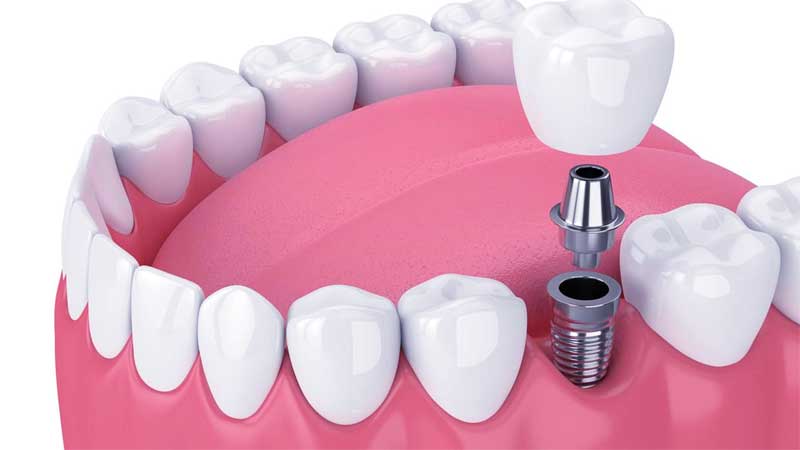
A dental implant is a small titanium screw that is surgically inserted into the jawbone, replacing the root of a missing tooth. The titanium implant can then, once it has osseointegrated, provide support for a dental crown, bridge, or other restoration.
A complete dental implant restoration generally has three main parts:
- Implant: The artificial tooth root placed into the jawbone.
- Abutment: A connector that attaches the implant to the replacement tooth.
- Crown: The visible tooth-shaped restoration designed to restore appearance and function.
Together, these components create a stable replacement for a missing tooth.
Who May Need Dental Implants?
Dental implants are an option for people who have lost one or more teeth due to disease. This may include caries, periodontal disease, trauma, and other dental problems. They can be used to replace an individual tooth or many.
Not every person is right for implants. A dentist or implant professional will assess your teeth, gums, and bone structure to determine whether an implant is suitable for you.
Bone support is mostly critical since the implant needs to osseointegrate with the jawbone. In situations where there is insufficient bone in the area to be treated, your dentist might suggest you undergo bone grafting before implant placement.
How Does the Dental Implant Procedure Work?
The dental implant process usually takes place in several stages. The exact treatment timeline can vary depending on your oral health and the number of implants required.
1. Initial Consultation
It all starts with a thorough oral exam. Your dentist or oral surgeon may perform dental X-rays, or even three dimensional images of your jawbone to evaluate the optimal location for your implant.
Your dentist will take a detailed history of your medical and dental history and your aims for treatment. If you are in the Potts Point, Kings Cross or surrounding Sydney suburbs, the first step to understanding your options may be to have an appointment at Dentistry At The Cross.
2. Implant Placement
In the second stage, the implant is surgically inserted into the jawbone. Local anaesthesia alone is usually applied, other sedation methods may also be offered given the procedure and individual requirements.
After being put in, the jawbone slowly expands to surround the implant using a process called osseointegration. This gives a solid structure for the replacement tooth.
3. Healing Period
The healing time can be anything from two to six months. The implant can take this long to fuse to the existing bone by osseointegration before the abutment takes the final restoration.
At this point your dentist will check the healing and give instructions on how to care for the area to ensure it stays clean and healthy.
4. Abutment and Crown Placement
After the implant has healed sufficiently, the abutment can be fitted, followed by the placement of the final crown onto the abutment.
The crown conforms to the teeth around in size, form, and colour to produce a natural smile.
Benefits of Dental Implants
Dental implants offer several potential benefits when compared with some other tooth-replacement options.
Natural-Looking Appearance
Implant-supported crowns are designed to resemble natural teeth. Your dentist can select a suitable shade and shape to help the restoration blend with your existing smile.
Improved Chewing
Missing teeth can make it harder to eat certain foods. A properly restored implant can provide a stable chewing surface and help restore normal oral function.
Support for Jawbone Health
When a natural tooth is lost, the bone in that area can gradually decrease. Because implants are placed into the jawbone, they can provide stimulation to the bone and may help reduce bone loss associated with tooth loss.
Stable Tooth Replacement
Implant-supported restorations can be fixed in place, depending on the treatment plan. This can provide an alternative to removable dentures for eligible patients.
Long-Term Solution
With appropriate oral hygiene, regular dental visits, and good overall care, dental implants can provide a durable tooth-replacement solution. Their longevity can vary based on factors such as oral hygiene, lifestyle, general health, and regular professional care.
Are Dental Implants Safe?
In general, dental implant treatment is regarded as a tried and tested treatment modality in dentistry. Still, as any surgical treatment, it can be tied to a series of risks and complications.
After the surgery some individuals might feel transient swelling and tenderness in the area of the implant, bruising, and minimal bleeding. Rare complications may include infections, implant breakage, presence of nerve symptoms and effects on the adjacent bone and tissues.
Other factors like smoking, systemic, and uncontrolled medical conditions, plaque control, poor oral hygiene and periodontal disease do also contribute to the risk of complication. Your dentist will assess your case and give you info about the possible risks before treatment.
How Long Do Dental Implants Last?
The life of a dental implant can be variable. The implant may last for many years, but the crown or other restoration can require repair or replacement due to wear over time.
Good oral hygiene is necessary for the implant and the tissues around it. Such problems can be checked for through the use of regular appointments for the patient to see their dentist.
How to Care for Dental Implants
Taking care of dental implants is similar in many ways to caring for natural teeth.
- Brush your teeth twice a day using a soft-bristled toothbrush.
- Clean between your teeth and around the implant as recommended by your dentist.
- Attend regular dental checkups and professional cleanings.
- Avoid smoking or tobacco products, which can negatively affect oral health and implant success.
- Follow your dentist’s instructions after implant surgery.
- Contact your dental professional if you notice persistent pain, swelling, bleeding, looseness, or other unusual symptoms.
Good daily care can help maintain healthy gums and support the long-term function of your implant restoration.
Dental Implants vs. Other Tooth Replacement Options
Dental implants aren’t the only option you have for missing teeth; talking to the dentist you may also be presented with options such as dental bridges or a removable denture.
A bridge replaces one or several missing teeth by being supported by the adjacent teeth. A denture is used to replace several missing teeth and can be removable. An implant is fixed into the jaw bone and can support onlays, bridges, or implant-supported dentures.
The best choice may differ based on variables like the quantity of missing teeth, quality of the bone, general oral state, financial circumstance and personal order.
How Much Do Dental Implants Cost?
On average the cost of dental implants can vary, it is dependant on a number of factors. Which can be, The number of implants, The type of restoration, The diagnostic imaging, The state of the jawbone and the need for any additional procedures i.e. Bone grafting etc.
If you would like to have any dental implants in Potts Point and Kings Cross, then the first step would be to book yourself in for a consultation with Dentistry At The Cross, where you will be able to share your specific needs, and they will be able to advise you about what the treatment involves, and how much it will cost.
Why Choose Dentistry At The Cross for Dental Implants?
Selecting the right practice for your dental implant treatment is also an important factor. Once your treatment plan has been made up, a good dental team will be able to assess your mouth, enable you to understand your treatment options and help choose the best plan for you.
If you live in Potts Point, Kings Cross or the Sydney CBD, Dentistry At The Cross is a convenient place to consult about missing teeth and possible dental implant treatment.
Conduct a thorough assessment and know what your course of treatment, recovery time, costs, and potential risks should be.
Conclusion
Teeth implants are a value added option for replacement of missing teeth and restoring an altered face to a person. Missing individual teeth, as well as teeth to support bridgework or removable dentures can all be replaced with implant stability and long term prognosis.
Planning to get dental implants in Potts Point and Kings Cross? The initial step will be to set an appointment with a primary care dentist. The team in Dentistry At The Cross can evaluate your personalized dental requirements and disclose if dental implants are right for you.
With a little forethought, plenty of professional care and attention, and proper oral health maintenance, dental implants can be a highly successful solution to help you smile confidently.